
Andong Hahoe Folk Village: A Complete Guide to Korea’s UNESCO Living Heritage
Travelers searching for an authentic and deeply cultural experience in Korea often overlook Andong—yet it is one of the most important historical regions in the country. At the heart of Andong lies Hahoe Folk Village, a UNESCO World Heritage site and one of Korea’s last remaining clan villages where people still live in traditional houses.
Unlike reconstructed folk museums, Hahoe is a fully preserved 600-year-old settlement shaped by the Ryu clan during the Joseon Dynasty. Here, you’ll find thatched-roof houses, Confucian traditions, forests, sandy riversides, and the famous Hahoe Mask Dance.
This guide gives you everything: how to travel there, what to see, hidden paths most tourists skip, food, photo spots, etiquette, and local tips gathered from repeated visits.
Why Hahoe Folk Village Matters
Hahoe is the embodiment of a concept called pungsu-jiri, Korea’s version of geomancy. The village is nestled inside a sweeping S-shaped bend of the Nakdong River, surrounded by mountains including the striking Buyongdae Cliff, which creates the iconic “river embrace” shape.
What Makes Hahoe Different from Other Villages
- It is a real residential village, not a reconstruction.
- Homes belong to generations of the same clan.
- The architecture includes traditional thatched-roof houses (초가) and upper-class tile-roofed hanok.
- UNESCO designated it in 2010 due to its cultural value.
- It hosts one of Korea’s most unique performances: the Hahoe Mask Dance Drama.
- The natural scenery around the village is breathtaking.
How to Get to Hahoe Folk Village
From Seoul
- KTX Cheongnyangni → Andong Station: ~2 hrs
- Then take Bus 46 or 246 → ~50 minutes
- Taxi from Andong Station → ~25 minutes (about 20,000–25,000 KRW)
From Busan
- Busan Station → Dongdaegu → Andong (train transfer): ~2.5–3 hrs
- Or express bus: ~3 hrs 30 min
Entrance Fee
- Adults: 5,000 KRW
- Youth: 2,500 KRW
- Children: 1,500 KRW
Best Time to Visit Hahoe Folk Village
- Spring: Flowers and cool weather—ideal for walking
- Autumn: Peak beauty with golden fields and fall colors
- Winter: Quiet, atmospheric, very few crowds
- Summer: Lush greenery but hot; bring water
Best Time of Day
- Morning (before 11 AM): quiet alleys and great lighting
- Golden hour: perfect for photographing thatched roofs
Top Things to See in Hahoe Village
1. Thatched-Roof Houses (초가집)
Hahoe is famous for its preserved thatched homes built for commoner life. The straw rooftops create soft textures against clay walls, ideal for photography.
Tip: Visit side alleys—they feel untouched by tourism.
2. Yangjindang House (양진당)
This tile-roofed hanok was once home to scholars and clan leaders. It’s one of the largest aristocratic residences in the village.
Why visit:
Its courtyards and wooden beams highlight the refined elegance of upper-class Joseon homes.
3. Bukchon Residence (북촌종택)
Another upper-class home built with exquisite balance and symmetry.
Tip: The front garden offers great morning light.
4. Hahoe Mask Museum
A must-see before the mask dance. Exhibits include:
- Korean masks
- Asian masks
- Rare ritual masks
- Explanations of character roles in the Hahoe dance
Entrance: 3,000 KRW
5. Hahoe Mask Dance Drama (하회별신굿탈놀이)
Performances typically run on weekends and holidays.
Duration: ~1 hour
Price: Free (included in general admission)
Best part:
Live drumming, satire, humor, and masked characters like the nobleman, the bride, and the fool.
6. Buyongdae Cliff Viewpoint (부용대)
One of Korea’s most magnificent viewpoints.
How to get there
A small ferry takes you from Hahoe to the opposite bank (about 3 minutes).
From there, it’s a 10-minute uphill walk to the cliff.
What you’ll see
- The entire S-shaped village from above
- Rice fields
- Nakdong River
- Straw roofs glowing at sunset
7. Sandy Riverside Walk
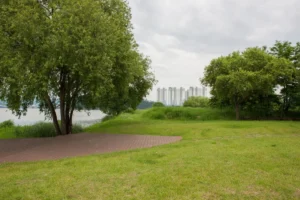
Near the village entrance, wide sandbanks make peaceful walking paths.
Why go:
It’s quiet, cool in summer, and great for photos.
Local Insider Tips (Things Most Travelers Don’t Know)
- Visit Buyongdae before the village in the morning for the best lighting.
- Bring your own snacks—café options are limited inside.
- Weekday visits feel almost empty, especially mornings.
- Spring & fall performances are the liveliest for mask dance.
- Don’t skip the small shamanic shrines tucked between houses.
- Bring mosquito repellent in summer.
- Etiquette: Lower your voice—residents live here.
- Wear sneakers: paths are uneven and sandy.
3-Hour Mini Itinerary (Best Beginner Route)
1. Mask Museum → 25 minutes
Learn the story behind the famous masks before exploring the village.
2. Thatched House Alleys → 40 minutes
Walk slowly through the central area and side lanes.
3. Yangjindang & Bukchon Residence → 30 minutes
Appreciate Joseon-era aristocratic architecture.
4. Riverside Walk → 20 minutes
Relax by the Nakdong River.
5. Ferry → Buyongdae Viewpoint → 45 minutes
End with the most iconic view in Andong.
Food Recommendations Near Hahoe
Although the village itself has limited restaurants, the area around the entrance and downtown Andong has excellent options.
1. Andong Jjimdak (안동찜닭)
Savory braised chicken with glass noodles.
2. Heotjesabap (헛제삿밥)
A local dish inspired by royal ancestral rites.
3. Andong Soju
Famous for its clean, traditional brewing method.
Common Mistakes & How to Avoid Them
❌ Mistake 1: Visiting only the central roads
Fix: Wander through the hidden alleys.
❌ Mistake 2: Skipping Buyongdae
Fix: It’s the highlight—don’t miss it.
❌ Mistake 3: Coming without checking mask dance schedule
Fix: Look up performance days beforehand.
❌ Mistake 4: Expecting cafés everywhere
Fix: Bring drinks, especially in summer.
❌ Mistake 5: Wearing sandals
Fix: Sneakers only—dirt and uneven roads.
FAQ
1. Is Hahoe Village worth a day trip?
Yes—it’s one of Korea’s most important cultural heritage sites.
2. Can I stay overnight?
Yes, local hanok stays are available near Andong city.
3. Are photos allowed?
Yes, but avoid pointing cameras into private homes.
4. How long should I spend inside?
At least 2.5–4 hours.
5. Is it stroller friendly?
Partially. Some roads are uneven and sandy.




댓글 0
첫 댓글을 남겨보세요.